The Fire That Wouldn’t Die: The Story of Centralia — America’s Eternal Coal Inferno

There are places in America where history whispers.
And then there are places where it burns.
Centralia, Pennsylvania, is one of those places.
This story is 100% true. And shocking.
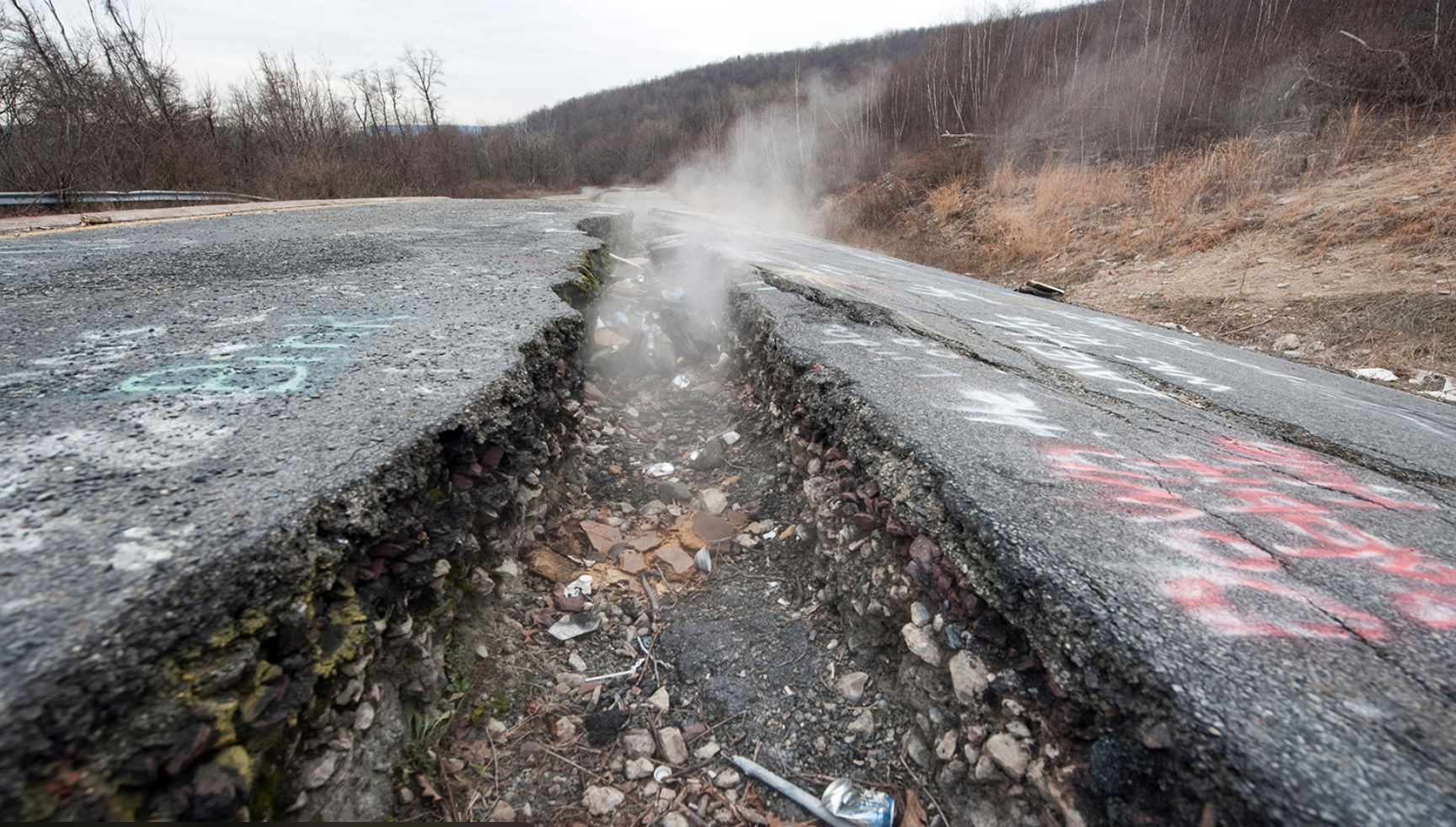
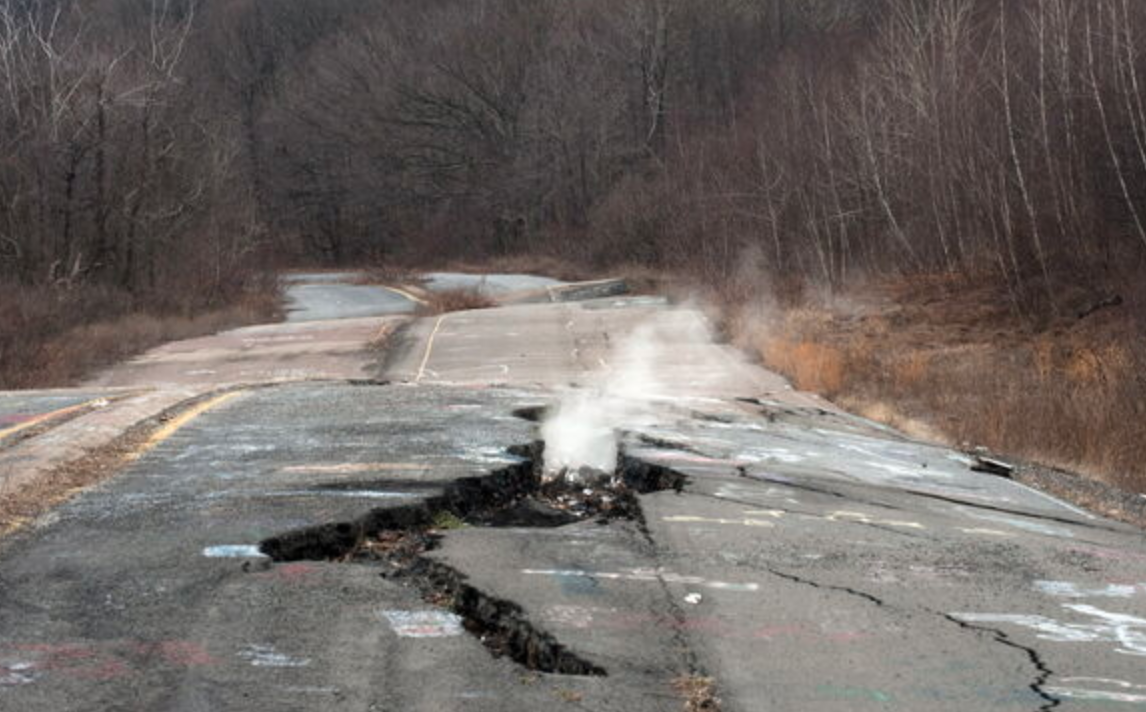
You don’t just arrive in Centralia… you feel it first. The road warps beneath your tires. The air carries a faint chemical heat. And if you stop the car, step out, and listen closely… the earth itself seems alive — breathing, venting, warning.
But this isn’t a ghost story. It’s something far more unsettling.
Because Centralia isn’t dead.
It’s still burning.
The Discovery That Built a Town
In the mid-1800s, long before highways and power grids stretched across America, energy came from the ground — and nowhere was that more evident than in Pennsylvania’s anthracite region.
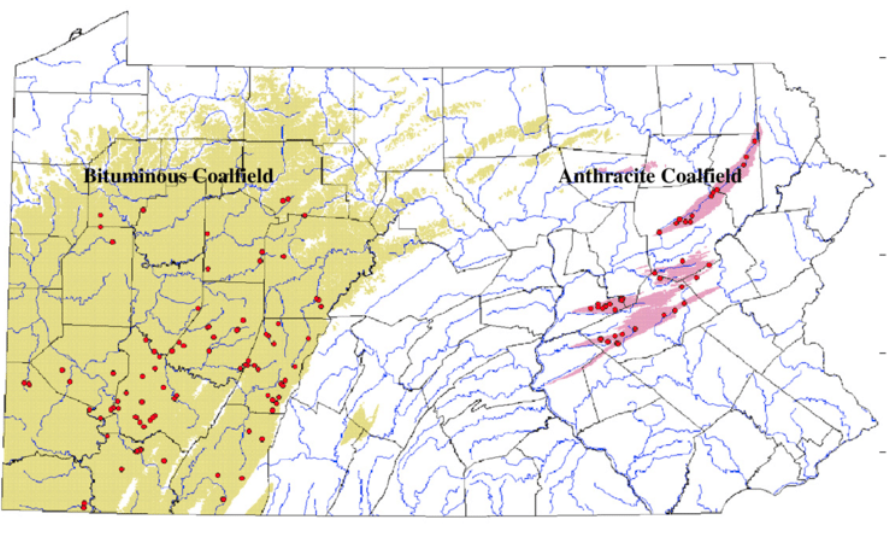
Beneath quiet hills and farmland lay dense, black veins of coal so pure and energy-rich that they would power an entire industrial revolution.
When prospectors realized what was buried beneath Centralia, everything changed.
This wasn’t just another coal deposit. This was anthracite — the hardest, hottest-burning coal on Earth. It lit furnaces, fueled locomotives, and heated homes across the Northeast. And once railroads connected the region, Centralia transformed almost overnight from a quiet settlement into a booming industrial hub.
The Best Free Investment You’ll Ever Make
Join Gold World today for FREE. Get the latest insight on gold, silver, and precious metals delivered straight to your inbox. When you become a member today, you’ll get our latest free report: “The #1 Golden Token to Buy Now.” Don’t Delay!
After getting your report, you’ll begin receiving the Gold World e-Letter, delivered to your inbox daily.
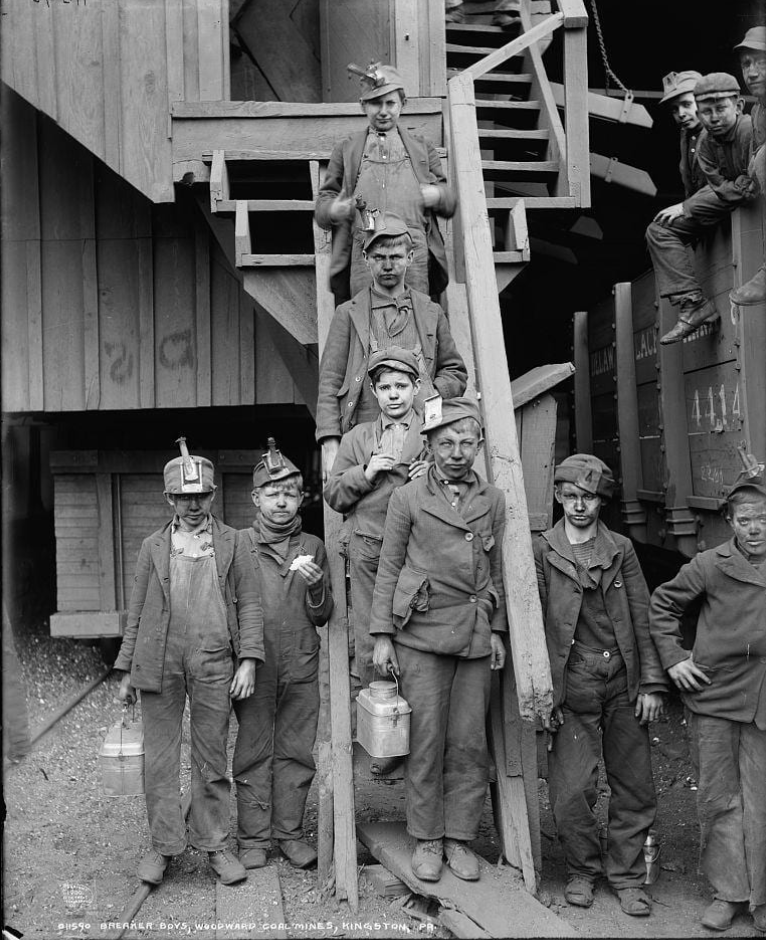
By the late 1800s, the town pulsed with life. Miners descended into the earth before sunrise. Trains hauled black rock out by the ton. Families filled the streets. Businesses thrived. Churches, schools, saloons — all built on the promise that the coal below them would last forever.
And for a while…
It felt like it would.
The Hidden Danger Beneath Their Feet
What the people of Centralia didn’t fully understand — what few people truly grasp even today — is that coal isn’t just fuel.
It’s potential fire.
The mines beneath the town weren’t neat or orderly. They were a chaotic web of tunnels carved over decades — some mapped, many forgotten. Abandoned shafts, hollowed-out chambers, and thin walls of coal left behind to hold up the earth above.
All of it sitting there…
Dry. Pressurized. Waiting.
Because coal doesn’t need much to ignite. It can smolder. It can self-heat. And once a fire reaches a coal seam underground, it becomes something entirely different — something almost impossible to control.
In fact, underground coal fires can burn for decades, centuries — even millennia, when insulated from rain and oxygen fluctuations.
Centralia was sitting on a ticking fuse.
It just didn’t know it yet.
1962: The Match Is Lit
The disaster didn’t begin with a collapse… or an explosion… or anything dramatic.
It began with something routine.
In May 1962, as they had done before, town officials ordered a cleanup of a local landfill — an open pit left behind from earlier mining operations. The solution was simple: Set the trash on fire and let it burn away.
It worked every other time.
But this time, something was different.
Beneath that landfill was an exposed connection to the old mine network — a hidden opening into the coal seams below.
The fire slipped through.
Silently. Unnoticed.
And once it reached the coal?
It didn’t stop.
That routine burn ignited a massive underground seam — triggering what would become one of the longest-running fires in American history.
A Fire That Moves in the Dark
At first, the town fought back.
They tried to dig it out. They tried to flood it. They tried to suffocate it.
But this wasn’t a surface blaze. This was a fire inside a labyrinth.
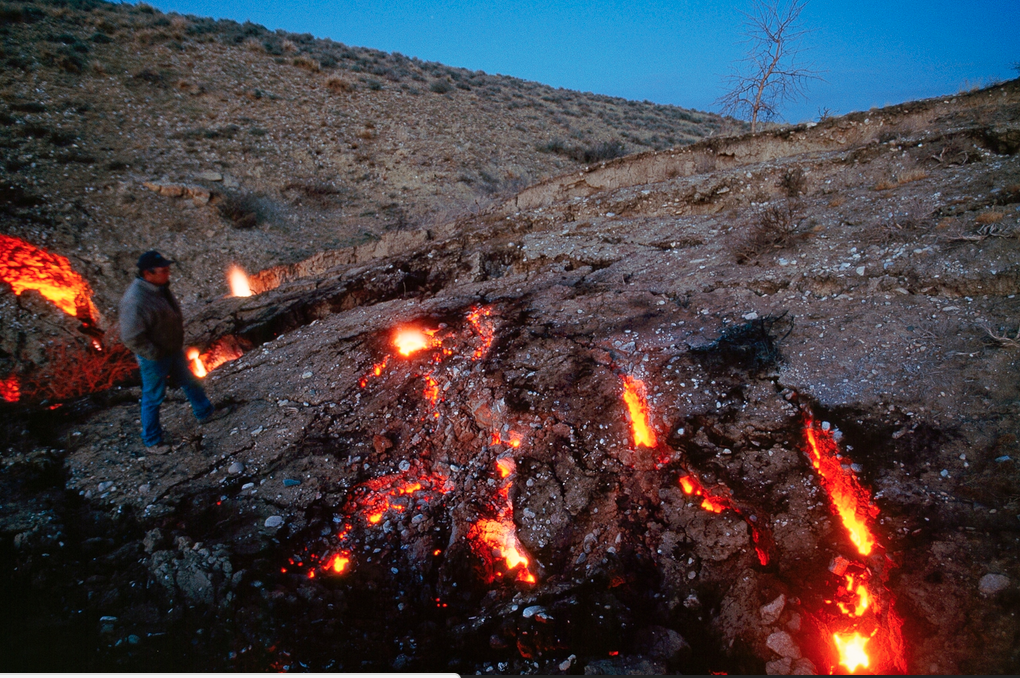
The tunnels beneath Centralia acted like arteries — feeding oxygen, carrying heat, spreading the fire slowly but relentlessly through miles of underground coal. Today, the fire stretches across thousands of acres, burning hundreds of feet below the surface.
And worst of all? You couldn’t see it. Not really.
You could only see the signs.
When the Ground Turns Against You
The first signs were subtle.
A little steam here. A warm patch of earth there.
Then came the gases — carbon monoxide leaking through the soil, invisible and deadly. Residents complained of headaches, dizziness, nausea.
Then came the cracks.
The roads began to split open. Steam poured from fissures in the ground. Entire sections of land became unstable.
And then, in 1981, the moment came that changed everything…
A young boy fell into a sudden sinkhole that opened beneath him — nearly swallowed by the earth itself as toxic gas surged upward.
That was the wake-up call. Because this wasn’t just a fire anymore.
It was the ground itself turning hostile.
The Death of a Town
Centralia didn’t collapse overnight.
It faded. Slowly. Painfully.
By the 1980s, the government made a decision: the town couldn’t be saved. A massive relocation effort began. Homes were bought out. Buildings demolished. Streets abandoned.
More than 1,000 residents were displaced.
What had once been a thriving coal town became something else entirely: A place erased from the map.
Today, only a handful of people remain — fewer than five in recent counts — living above a fire that could outlast generations.
The town even lost its ZIP code.
That’s how complete the disappearance was.
Still Burning… With No End in Sight
Here’s the part that feels almost impossible to comprehend…
The fire is still burning.
More than 60 years later.
And experts believe it could continue for another 100–250 years.
Temperatures underground have reached extreme levels — hot enough to warp roads, kill vegetation, and vent toxic gases through the surface.
And there is no realistic way to stop it.
To extinguish the fire would require digging up massive sections of land, isolating oxygen flow, and removing fuel sources across miles of underground terrain.
In other words?
It’s not just impractical. It’s nearly impossible.
What Centralia Really Represents
Centralia is often described as a ghost town.
But that’s too simple. It’s something more profound.
It’s a symbol of humanity’s relentless pursuit of energy — and the unintended consequences that can follow.
Because this wasn’t negligence in the traditional sense.
It was routine. It was normal. It was business as usual.
A landfill fire. That’s all it took.
And from that single decision came a disaster that has outlived generations — and will likely continue long after we’re gone.
The Fire Beneath the Future
Here’s what makes Centralia more than just history.
We haven’t changed.
We’re still chasing energy.
Only now, it’s not just coal.
It’s:
- Copper for electrification
- Uranium for nuclear power
- Lithium and rare earths for batteries and AI infrastructure
The scale is bigger.
The stakes are higher.
But the principle?
It’s the same.
We dig. We extract. We push deeper.
And now we capture and kill leaders of foreign nations that control vast amounts of energy for global consumption.
Because energy is civilization.
As Centralia still burns 60 years after catching fire, bombs and missiles pepper the skies in Iran and all throughout the Middle East.
Why?
Because just as Centralia isn’t a story about coal, so is Venezuela and Iran not a story about oil and natural gas.
It’s a story about what happens when mankind taps into something powerful… and loses control.
Get to the good, green grass first…
The Prophet of Profit,

Brian Hicks
 Check us out on YouTube!
Brian is a founding member and President of Angel Publishing. He writes about general investment strategies for Wealth Daily and Energy and Capital. Brian is the managing editor and investment director of R.I.C.H Report (Retired Independent Carefree Healthy), New World Assets and Extreme Opportunities. For more on Brian, take a look at his editor’s page.
The Best Free Investment You'll Ever Make
We never spam! View our Privacy Policy
After getting your report, you’ll begin receiving the Wealth Daily e-Letter, delivered to your inbox daily.
Angel Publishing Investor Club Discord - Chat Now
Brian Hicks Premium
Introductory

Advanced


